

















The short answer
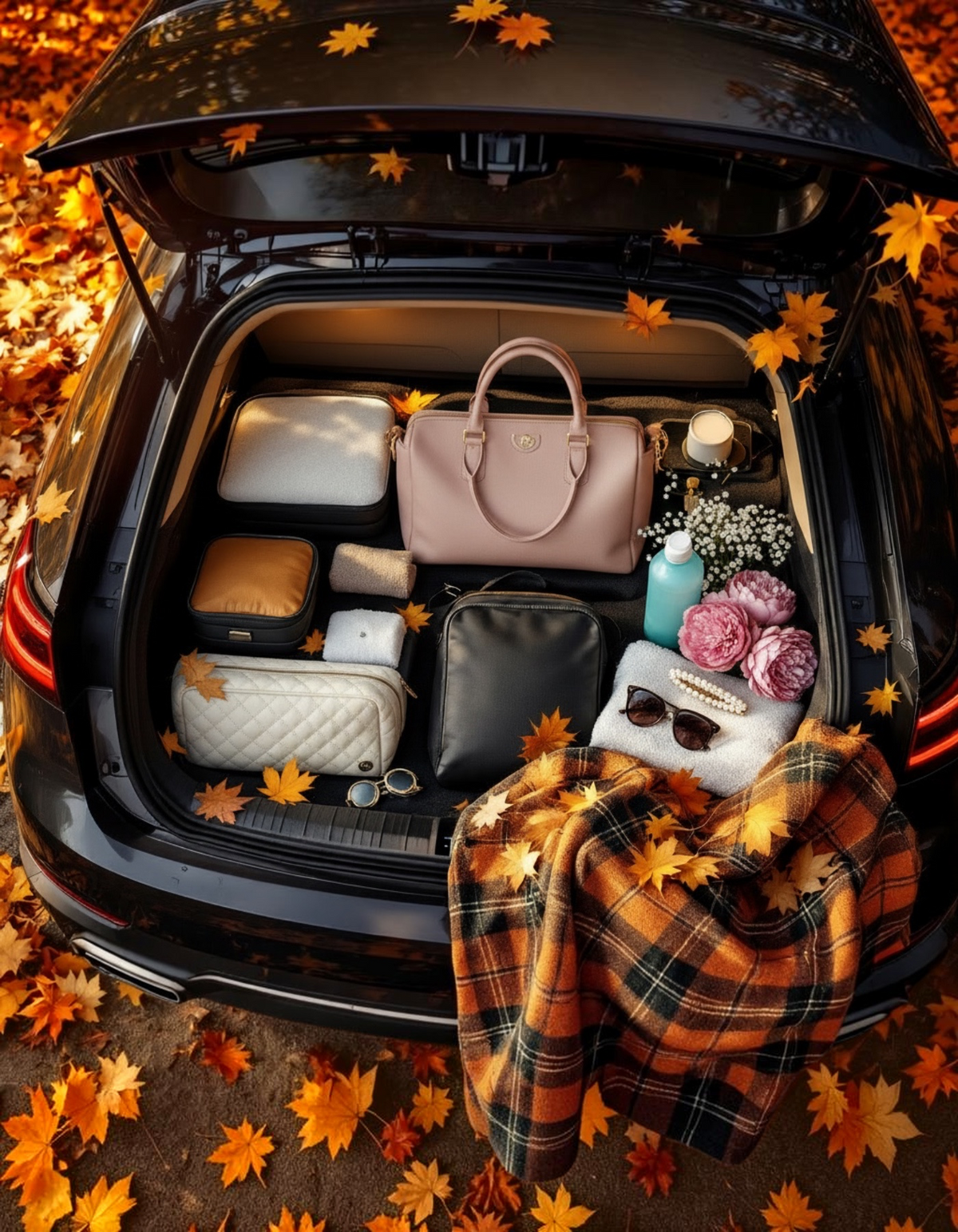
Pack the car for a family visit by grouping belongings for planned stops, arrival, and overnight use. Then arrange and secure those groups according to your vehicle’s instructions. Give temperature-sensitive food its own transport plan, and think about what you’ll bring home before filling the last available space.
The weekend bag is ready. The serving spoon is still in the kitchen.
A family visit brings together a particular collection of things: clothes for a couple of nights, something for the table, a book someone lent you, perhaps a bag that will come home fuller than it left.
Those belongings don’t all need the same place. Some matter at the first stop. Some should go straight inside when you arrive. Others can stay packed until the evening.
A useful arrangement follows that sequence. It leaves you thinking about the people you’re visiting rather than which bag contains the one thing everyone is waiting for.
Our Travel & Auto essentials guide covers wider trip preparation. Here, we focus on packing a passenger vehicle for a short visit, with a practical example and a clear role for smaller-item organization.
Pack for Stops, Arrival, and the Trip Home
Start with when you’ll use something, not which container could hold it. That makes it easier to choose what belongs together.
Make Three Small Groups
Before loading, gather the belongings into three groups:
- Planned-stop supplies: the things you’ll use after parking along the way.
- Arrival items: food that needs attention, something you’re returning, or a gift you want to carry inside.
- Overnight belongings: clothing, toiletries, and the other things that can wait until you settle in.
These are planning groups, not instructions to put three loose bags in the passenger compartment. Their eventual positions must suit the vehicle and the load.
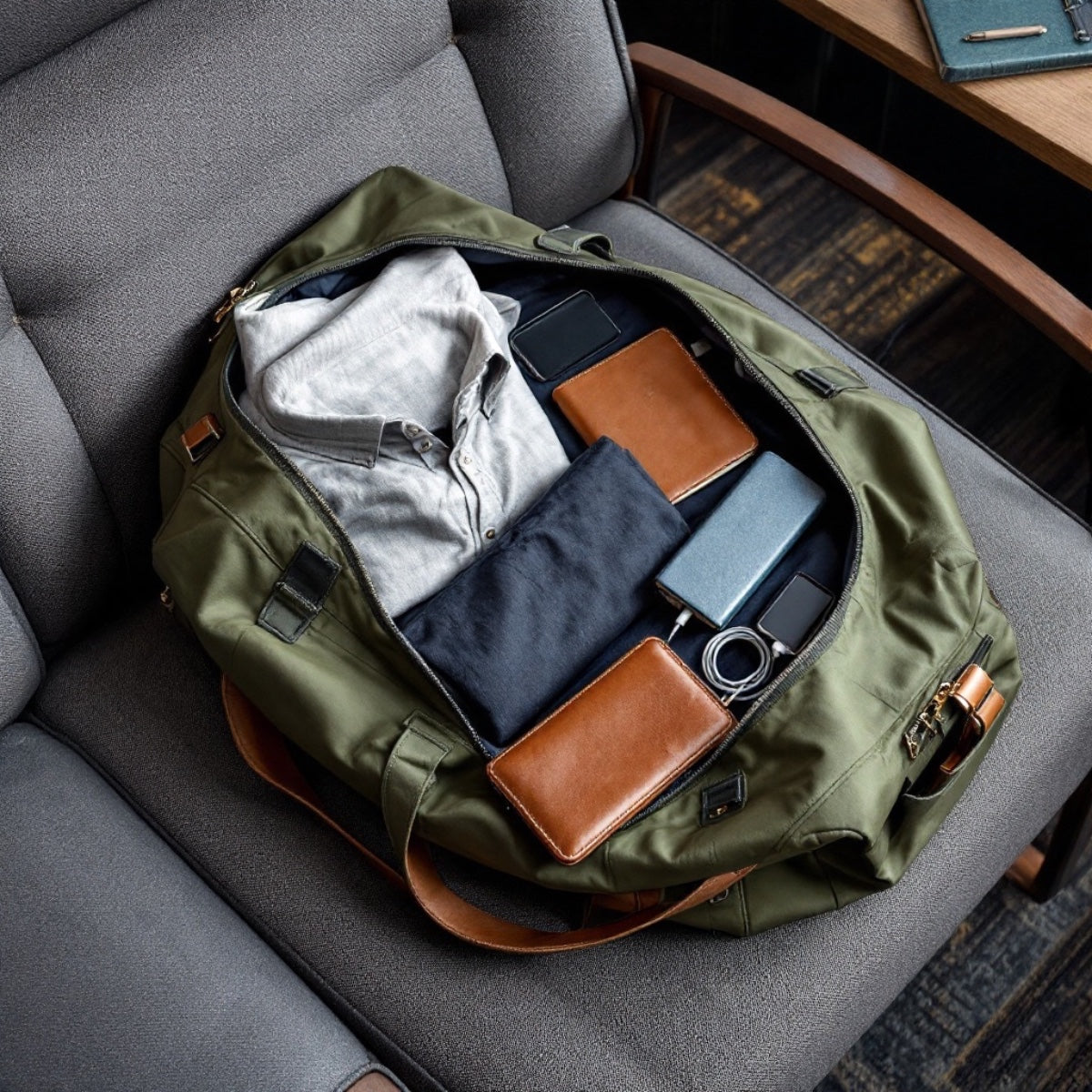
Keep useful existing bags in the plan. A familiar weekend bag already has a job. It doesn’t need replacing because a few smaller items would benefit from a different arrangement.
Think About the First Stop
Picture the first planned break. If you expect to change a layer or use picnic supplies, avoid burying those things beneath all the overnight luggage. Accessible while parked is the useful goal.
Set navigation and organize driving essentials before moving. The National Highway Traffic Safety Administration’s distracted-driving guidance explains that attention taken away from driving creates risk. Reaching into a bag is not a task to build into the driving routine.
A short note can be enough: “At the stop, we need this bag. At arrival, the chilled food goes inside first.” You’re planning a visit, not running a luggage terminal.
Give Luggage a Place Without Borrowing Passenger Space
Available space is not the same as suitable loading space. Passenger comfort, visibility, vehicle limits, and proper securement come before a convenient unloading order.
Start With the Vehicle’s Limits
Use the loading information for your exact vehicle. People, luggage, food, and other cargo all contribute to the load; an empty-looking corner does not establish spare weight capacity.
NHTSA’s tire-safety guidance directs drivers to vehicle information for recommended tire pressure and loading. Use the vehicle placard and owner’s manual rather than treating the maximum pressure marked on a tire as your vehicle’s recommended setting.
For luggage placement and restraint, follow the owner’s manual and the instructions for any cargo equipment. A sedan’s separate trunk and an SUV’s cargo area are not interchangeable loading arrangements.
Make Retrieval Work Within the Loading Plan
Begin with the larger and heavier belongings and their permitted positions. Keep weight low where the vehicle instructions allow, and use the specified securement arrangements. Do not build an unstable stack simply to preserve an attractive rectangle of empty floor.
Keep bags clear of pedals, controls, seat movement, seat belts, and airbag areas. Preserve the driver’s required view and every passenger’s proper seating position. When child restraints are in use, their installation and use instructions remain unchanged by the packing plan.
Then consider retrieval. Can the planned-stop bag be reached after parking without dismantling the load? Can temperature-sensitive food come out promptly on arrival? If the answers conflict with secure placement, change the bags or the amount you’re bringing—not the securement requirements.
Compartments can keep belongings grouped, but an organizer is not automatically a cargo-restraint system. Handles, dividers, and a tidy appearance do not establish crash protection.
Keep Food Transport Separate From Ordinary Storage
A container that organizes food is not necessarily a container that keeps it at a safe temperature. Plan temperature-sensitive dishes separately from gifts, clothing, and serving supplies.
Give Chilled Food Its Own Plan
For a dish that travels chilled, use an appropriate cooler with sufficient ice or frozen gel packs to maintain its temperature. Reserve the cooler’s space while planning the load, then pack the chilled food close to departure.
FoodSafety.gov’s chilling guidance calls for keeping cold food at 40°F or below. Perishable food should not remain unrefrigerated for more than two hours, or one hour when temperatures are above 90°F. Plan for the whole period outside temperature control, not just the time the car is moving.
A cool-feeling day or an air-conditioned cabin is not a measured food-storage temperature. A suitable thermometer is more useful than guessing from how the bag feels.
Coordinate with the host, too. If the dish needs refrigerator space or finishing in the oven, a quick conversation can settle that before you leave.
Separate the Food From the Serving Extras
Serving utensils, napkins, and an empty container for the return trip can travel together without occupying the food’s temperature-controlled space. Keep them clean and protected from spills.
This is a good example of two needs that shouldn’t be confused. The cooler manages the chilled dish; a separate bag or organizer can keep its nonperishable accessories together.
Give the cooler an appropriate secured position and an unloading plan. “Food goes inside first” works best when getting it out doesn’t mean shifting every suitcase onto the driveway.
A Two-Night Visit, Packed in Order
Reserve space for the most constrained items first, then arrange the smaller groups around the trip. The example below is a planning exercise, not a tested vehicle layout.
Reserve the Space Before Filling It
Imagine two adults making a two-night visit with one planned stop. They’re bringing overnight bags, a chilled dish, a small gift, and a few serving accessories.
Before loading anything, they identify suitable positions for the luggage and cooler using the vehicle’s instructions. That keeps the cooler from becoming the last awkward object looking for a space.
| Group | Example contents | When it matters | Planning decision |
|---|---|---|---|
| Overnight belongings | Clothes and toiletries in existing travel bags. | After arrival. | Assign suitable luggage positions before arranging smaller extras. |
| Planned-stop bag | A layer and supplies needed during the parked break. | At the stop. | Choose a secured location that can be accessed without unloading the whole car. |
| Chilled food | A covered dish in an appropriate cooler. | Throughout transport and promptly on arrival. | Reserve space early; maintain temperature and arrange suitable securement. |
| Small arrival items | A gift, returned book, and protected serving accessories. | When carrying things inside. | Group compatible items in an existing bag or suitably sized organizer. |
| Return-trip belongings | Empty containers, shopping, or something the host sends home. | Before leaving again. | Allow realistic space and reassess the changed load. |
The result is not necessarily more containers. It may be two familiar travel bags, a cooler, and one smaller group that benefits from clearer organization.
Leave a Place for What Comes Home
The outward journey rarely tells the whole story. There may be a container to return, a borrowed coat, or leftovers the host offers.
Allow practical room where you can, without assuming an arbitrary amount of empty space guarantees capacity. Weight limits and proper securement still apply on the return trip.
Leftovers need the same food-temperature planning as the dish you brought. An empty serving container solves the packaging question, not the refrigeration question.
Where a Trunk Organizer Earns Its Place
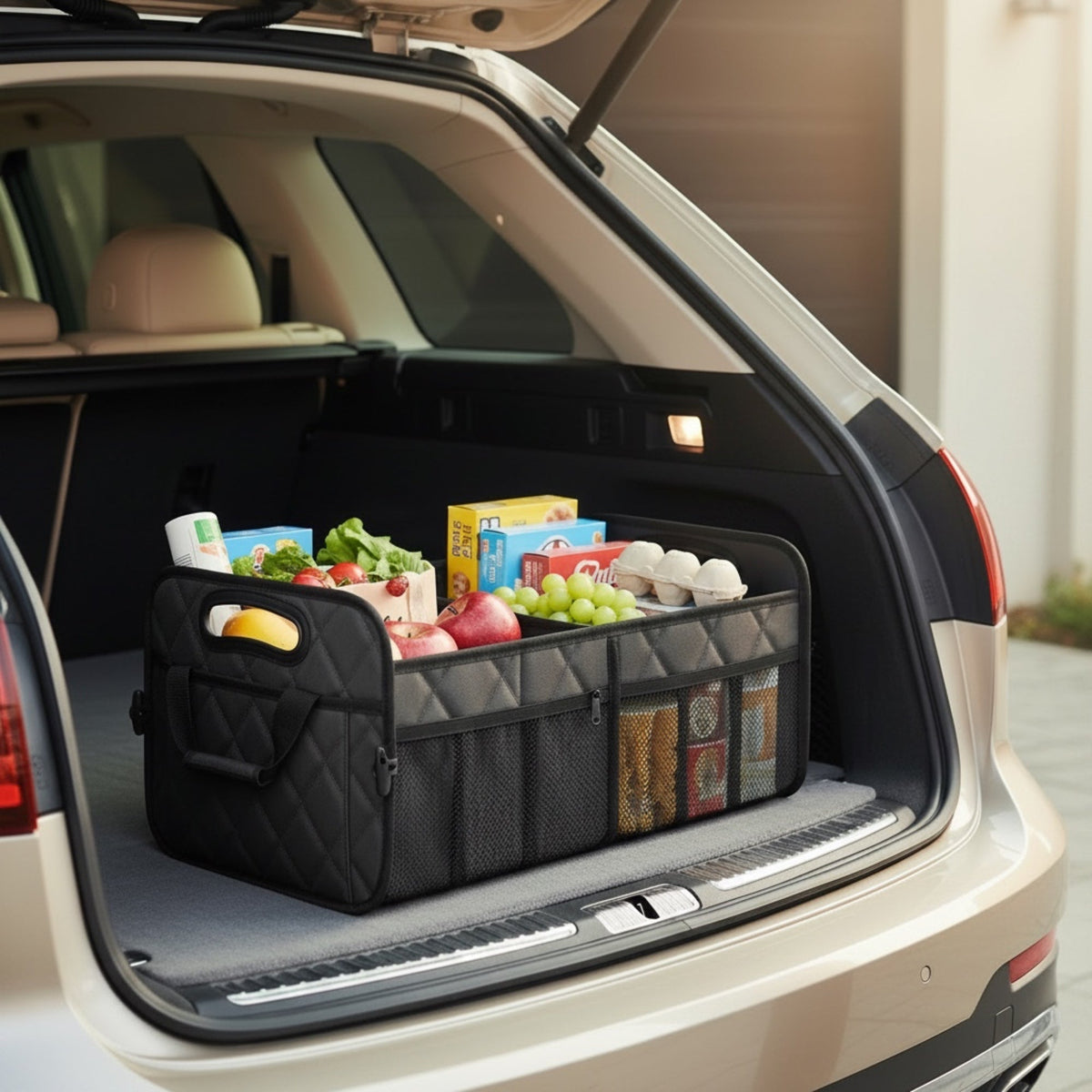
An organizer is most useful when it gives smaller belongings a clear group without taking needed space from larger bags. Choose it for those contents, not simply to fill the trunk.
Small Items Need a Different Arrangement
A weekend bag is already a container. Putting it inside another one may add little. Smaller arrival items can be a different story: a returned book, a wrapped gift, and protected serving accessories may be easier to account for when grouped.
Lay that group out before choosing storage. Compare the actual contents with usable compartment dimensions, the trunk opening, and the space remaining beside the luggage.
Also decide whether you’ll remove items individually or lift a loaded container. That changes what you need to know about handles, carrying limits, and comfortable access.
If you’re still comparing formats, our guide to choosing a car trunk organizer focuses on the container-selection decision. This visit plan starts with what you’re bringing and when you’ll use it.
Explore Love Dug’s Trunk Organizer
A place for the smaller things
Consider our Multi Compartment Waterproof Car Trunk Organizer when your visit supplies would benefit from a separate group. Compare the current option’s dimensions, compartment layout, and instructions with the belongings and vehicle space in your plan.
Choose for the organization you need. Waterproof wording does not establish insulation, leakproof food containment, or cargo-restraint performance.
Before You Leave—and Before You Drive Home
Finish the packing decisions while parked, and review the return load as a new arrangement. The same bags may be carrying different things by then.
Let Conditions Shape the Departure
Look at the route, weather, and likely stopping opportunities before deciding when to leave. The useful plan is one that fits the conditions, not one that relies on arriving at an exact minute.
When winter conditions are possible, NHTSA’s winter-driving guidance is a useful starting point for vehicle preparation, supplies, and trip planning. Follow current route information and change or postpone the journey when conditions warrant it.
Keep any vehicle emergency equipment required for your trip accounted for in the load. An appealing packing arrangement should not make essential equipment inaccessible.
Finish the Details While Parked
Before departure, review the essentials: suitable loading and securement, clear visibility and controls, proper passenger seating, food-temperature arrangements, and the location of supplies for planned stops.
Set the route before moving. If the arrangement needs changing along the way, stop somewhere safe before adjusting it.
On arrival, bring temperature-sensitive food inside promptly and carry in the things that belong with the visit. Afterward, review what has changed: different contents, extra bags, fewer ice packs, or a new container that doesn’t fit the original plan.
Once home, empty food and rubbish, care for containers according to their instructions, and return everyday equipment to its usual place. The visit can leave good memories without leaving every bag in the car until next weekend.
Car-Packing Questions
Use these distinctions to finish the plan without adding unnecessary equipment.
Should I Pack the Things I Need First Last?
Often that helps with retrieval, but only within an appropriate loading arrangement. Weight distribution, securement, visibility, and passenger requirements come first. Avoid putting a loose or unstable item on top simply because you’ll want it at the next stop.
Do I Need a Trunk Organizer for a Weekend Visit?
Not necessarily. Existing bags may handle the trip well. An organizer becomes worth considering when smaller belongings need a clear group and its footprint suits the remaining cargo space.
Can a Waterproof Organizer Replace a Cooler?
No. Waterproofing and insulation are different properties. Temperature-sensitive food needs suitable temperature control; the word “waterproof” does not establish that capability.
Where Should the Stop Bag Go?
In a location permitted by the vehicle instructions where it can be secured and retrieved after parking. There is no universal position that suits every vehicle. Keep it clear of controls, seating equipment, and airbag areas.
Arrive with what you need—and room to enjoy being there.
Start with the visit, keep the bags that already work, and give the smaller things a clear purpose and place. The best part of the plan is getting to stop thinking about it once you arrive.
Sources and Updates
This guide offers a planning framework and an illustrative two-night visit, not a tested packing layout. The linked guidance does not verify the featured organizer’s specifications. Follow the instructions for your exact vehicle, cargo equipment, food containers, and selected product.
Review the plan when the passengers, cargo, route, or weather change. Product information and official guidance should be consulted in their current form.
Selected sources
Read more

Keep the room you love. Compare picture size, brightness, streaming connections, and the complete setup before choosing a mini projector for evenings at home.

A spoon for the sauce, a turner for breakfast, and a drawer that still closes. Choose a utensil set around your meals, cookware, and everyday cleanup.