















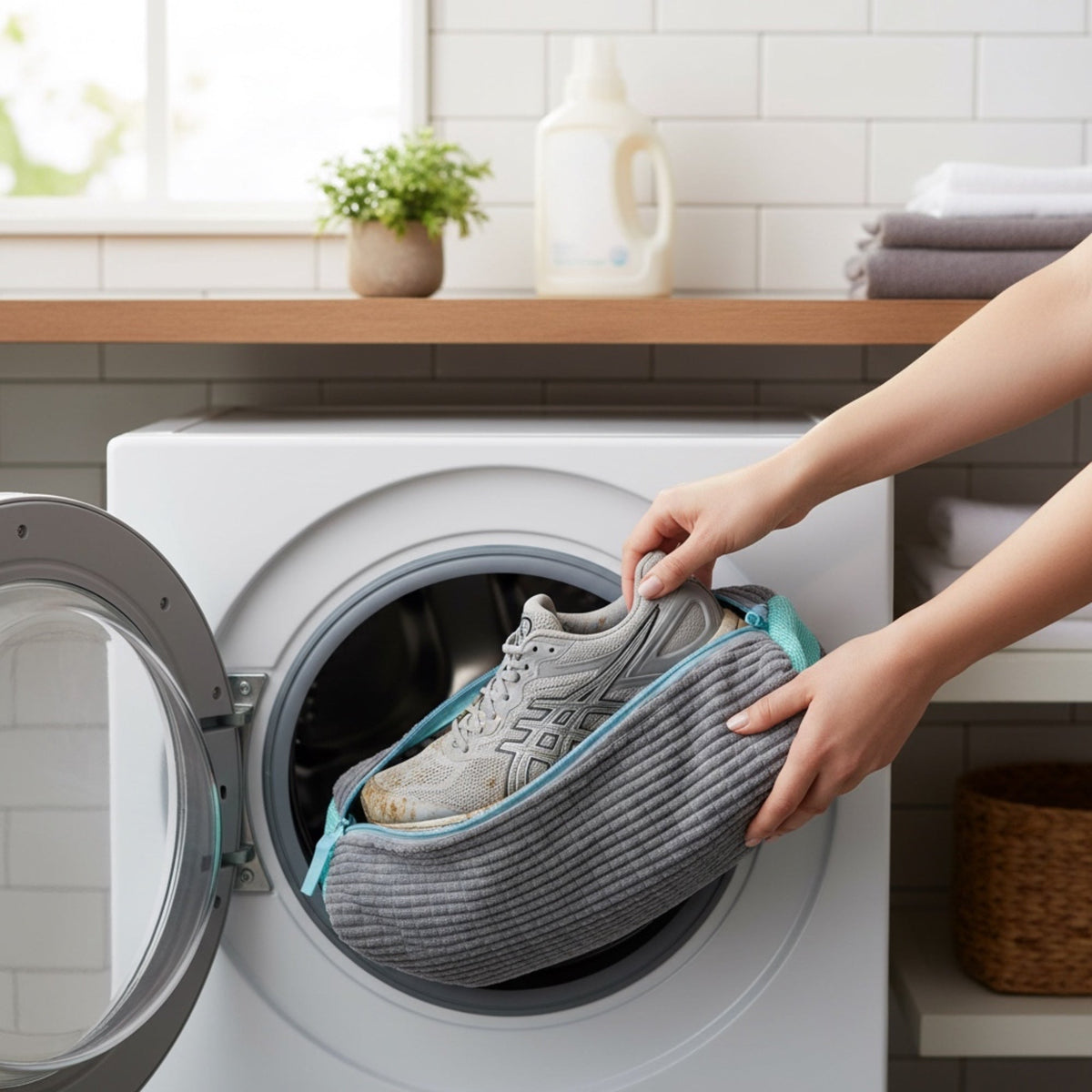
The short answer
You can machine-wash some shoes, but only when the instructions for that pair permit it and your washing machine allows the load. A shoe laundry bag may be a useful accessory for an approved wash. It cannot make a hand-clean-only shoe machine-washable, and it does not automatically make the shoe suitable for a dryer.
A little mud is not a retirement notice.
The sneakers by the door have had a good week. A walk, a grocery run, perhaps a shortcut that turned out to be mostly puddle. They need attention, but the right next step is not necessarily a trip through the washer.
Sometimes the useful job is brushing dirt from the sole. Sometimes it is cleaning a small mark. And sometimes, for a pair whose instructions allow it, machine washing belongs in the routine.
The trick is choosing the method before the accessory. That keeps a convenient-looking bag from making the decision for the shoes inside it.
Our Home & Kitchen essentials guide treats care as part of choosing an everyday item. Here, we apply that idea to shoes: what belongs in the washer, what a laundry bag contributes, and how to choose one for a permitted wash.
Start With the Whole Shoe, Not Just the Fabric
The instructions for the complete shoe matter more than whether the upper looks washable. Mesh, canvas, and synthetic fabric do not tell you everything about the construction underneath.
Read the Instruction for This Pair
Look for the manufacturer’s care information for the actual model. It may be on a label, the original product page, or a support page. If the instructions prohibit machine washing, a bag does not change that answer.
For example, Nike’s guidance on putting shoes in the washer recommends cleaning by hand rather than machine washing. A sneaker’s athletic appearance is not permission to put it through a cycle.
If the care information is missing, ask the manufacturer rather than borrowing instructions from a similar-looking pair. Until then, do not treat a full wash as the default.
| What the instructions say | Useful next step |
|---|---|
| Machine washing is permitted | Match the specified method with your washer’s instructions and any required bag or loading arrangement. |
| Hand cleaning or spot cleaning only | Use that method. Do not substitute a machine cycle because the shoe fits inside a bag. |
| No clear instructions | Request the model-specific care guidance before soaking or machine washing. |
| The shoe has loose trim, separation, or damage | Resolve the damage before washing. An accessory bag is not a repair. |
The Upper Is Only Part of the Shoe
A shoe can combine fabric, foam, adhesives, overlays, lining, and decorative pieces. One component’s tolerance for water does not establish a cleaning method for all of them.
That is why “canvas shoes” and “mesh sneakers” are starting descriptions, not complete care instructions. The same applies to removable parts: take out an insole only when it is designed to be removed, and use its own permitted cleaning method.
Choose the Smallest Cleaning Job That Works
If the dirt is local, start with a local cleaning method approved for the material. Washing the entire shoe adds drying time and exposes parts that may not need cleaning.
Surface Dirt Does Not Always Need a Full Wash
A dusty sole and a stained fabric upper are different jobs. For loose, dry dirt, an appropriate soft brush can be more useful than immediately wetting the whole shoe. Keep delicate finishes and trims in mind, and use the method recommended for the material.
Nike’s shoe-cleaning guide separates dry brushing and hand cleaning from a machine-washing approach. The useful principle is to work on the part that needs attention instead of making every mark a full-shoe laundry project.
For a small mark, follow the approved spot-cleaning directions. Do not turn “use a damp cloth” into “leave the shoes soaking.” Those are very different amounts of water exposure.
Hand Cleaning and Soaking Are Different
“Not machine-washable” does not mean “safe to immerse in a sink.” Some shoes call for surface cleaning only. Others have specific instructions for hand washing.
Choose from the actual directions, not from a universal recipe involving detergent, hot water, or a household cleaning mixture.
| Method | When it earns its place | Main trade-off |
|---|---|---|
| Approved surface cleaning | A limited area needs attention. | It targets the mark rather than cleaning the entire shoe. |
| Manufacturer-directed hand cleaning | The shoe needs broader cleaning but its construction requires a controlled method. | You do the work directly and still need to plan drying. |
| Permitted machine washing | The shoe and appliance instructions allow the intended wash. | Preparation, appropriate loading, and drying remain part of the job. |
What a Shoe Laundry Bag Can—and Cannot—Do
A suitable washing bag provides a containing layer during an approved wash. Its loading instructions, construction, and closure determine how it should be used. It is not a guarantee against damage.
Whirlpool’s guide to washing shoes discusses a bag as part of a method for suitable footwear. That appliance guidance and the shoe manufacturer’s directions answer different questions: what the washer can accommodate, and what the shoe can tolerate.
Both need to fit the plan. A washer’s shoe-care article does not override a footwear maker’s instruction to hand clean.
Containment Is Not Permission
A bag does not remove water, detergent, temperature, or movement from the wash. Nor does it restore a loose sole or make an unsuitable load appropriate for the machine.
Be cautious with claims such as “fits every shoe,” “prevents all damage,” or “makes washing silent.” Those are performance promises, not qualities you can establish from the words “shoe laundry bag.”
When machine washing is already permitted, explore Love Dug’s Soft Laundry Bags for Shoes. The useful next comparison is the bag’s intended loading and usable space—not whether it can change your footwear’s care instructions.
Choose the Bag Around the Shoe’s Actual Shape
Compare the complete shoe with the bag’s usable dimensions and intended load. A U.S. shoe-size label is not a measurement of the space the shoe occupies.
Measure the Shoe, Not Its Size Label
Two shoes in the same labeled size can have different sole widths, heel shapes, and upper heights. A low-profile sneaker and a chunky trainer may need noticeably different room.
Measure the outside of the shoe: its length, widest point, and height. Then distinguish the bag’s exterior measurements from its usable interior and opening. Padding, seams, and shape can affect the space available.
| Record | Why it matters |
|---|---|
| Shoe length, width, and height | Describes the actual object going into the bag. |
| Bag opening and usable interior | A generous exterior measurement does not necessarily mean an easy fit through the opening. |
| Intended loading | Establishes whether the bag is designed for one shoe, a pair, or another specified arrangement. |
| Closure instructions | Shows how the bag should close without forcing or distorting the shoe. |
| Package quantity | Separates the number of bags supplied from the number of shoes each bag is intended to hold. |
Read the Loading and Closure Details
Do not squeeze a pair into a bag simply because the closure eventually meets. Follow the intended loading arrangement and leave whatever room the instructions require.
Likewise, do not assume that two bags should always be used together or that adding towels is appropriate for every machine. The permitted load comes from the appliance and product instructions, not a universal balancing trick.
For closure details, look for a clear demonstration or explanation. A photograph of a zipper does not establish a locking mechanism, and a close-fitting cover does not prove that a closure can never open.
Give Drying Its Own Plan
Choose the washing method only after you know how the shoes and bag will dry. The useful setup has a finish, not just a start button.
Washer-Safe Does Not Mean Dryer-Safe
A shoe may permit one cleaning method and prohibit tumble drying. A bag’s dryer claim cannot override that restriction.
Nike’s cleaning guidance includes air-drying shoes. Use the drying method for your own pair, including any limits on heat or placement, rather than assuming the dryer is the next stage.
A radiator, hair dryer, or sunny windowsill is not an automatic substitute. Follow the shoe’s directions for drying conditions and shape support; do not add heat to hurry an arrangement that was intended to dry without it.
Leave Time for the Pair You Want to Wear
Drying time depends on the shoe’s construction, how wet it became, and the conditions. A promise of “ready tomorrow” is not much help when the lining is still damp.
Plan the job when you have another suitable pair to wear. Give the empty bag its own care and drying routine too, rather than leaving both items bundled together until the next outing.
Before returning them to closed storage, make sure the shoes and bag are fully dry. It is a small final step that is easy to overlook once the visible dirt has gone.
Turn the Decision Into a Useful Buying Brief
Shop for a bag only after you can name the permitted method, the intended shoes, and the required fit. Five short notes are enough.
- The pair: exact model and current condition.
- The method: the cleaning instructions that permit the intended wash.
- The appliance: its allowed load and any relevant restrictions.
- The fit: shoe measurements, bag interior, opening, and loading arrangement.
- The finish: separate drying and storage plans for shoes and bag.
Consider two illustrative pairs: one has explicit machine-washing instructions; the other calls for surface cleaning only. Even if both fit the same bag, they do not belong in the same cleaning plan. The first may have a use for the accessory. The second needs its prescribed cleaning method.
For an approved machine-washing routine
Explore our Soft Laundry Bags for Shoes with that brief beside you. Compare the current option’s dimensions, quantity, loading, and care with the pair you intend to clean.
A useful accessory fits a job you have already understood.
Shoe-Washing Questions
Can Every Sneaker Be Machine-Washed?
No. A sneaker’s appearance or upper material does not establish a washing method for the complete shoe. Use the care instructions for the actual pair.
Does a Bag Make Hand-Clean-Only Shoes Machine-Washable?
No. The bag does not remove exposure to water, detergent, temperature, or movement. Keep the cleaning method specified for the shoe.
Should I Put One Shoe or a Pair in Each Bag?
Use the bag’s documented loading arrangement. Compare the actual shoe dimensions with the usable interior and opening; do not infer capacity from package quantity.
Can a Pillowcase Replace a Shoe Laundry Bag?
Only consider an alternative when the relevant instructions permit it and explain how it should be used. Fabric alone does not establish suitable containment, closure, or loading. A purpose-made bag also needs to match the instructions—it is not automatically suitable.
How Long Will the Shoes Take to Dry?
There is no reliable universal time. Construction, moisture, and drying conditions all matter. Follow the prescribed method, allow enough time, and assess the interior as well as the visible upper before wearing or storing the pair.
Choose the care for the shoes. Then choose the accessory for the care.
The goal is not to put every pair through the same routine. It is to give the shoes you enjoy wearing the attention they actually need—and have them ready for wherever you are going next.
Sources and Updates
This guide provides a selection framework and illustrative examples, not a universal washing procedure. Manufacturer references explain why shoe and appliance instructions must be considered separately. They do not verify Love Dug’s bag dimensions, capacity, closure, or performance.
Use the current instructions for your exact shoes, appliance, and selected bag. Revisit the decision when any of those items changes.
Selected sources
Read more

A favorite main, one clear place to chop, and a table you can actually sit at. Plan a holiday meal around your oven, serving space, and the people coming over.
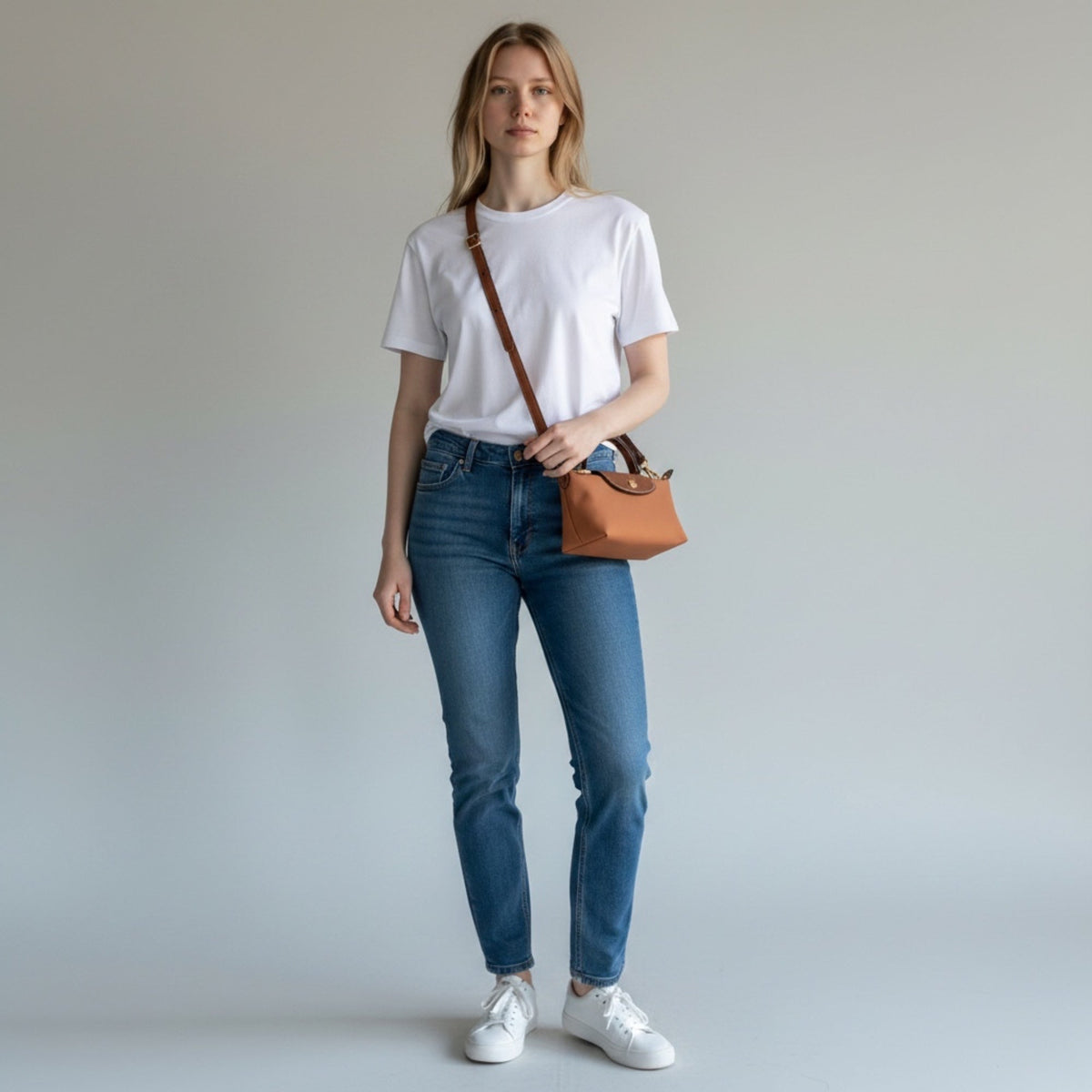
The bag is still a favorite. Give it a quieter strap, a little contrast, or a better home for the small things—without changing everything you like about it.