















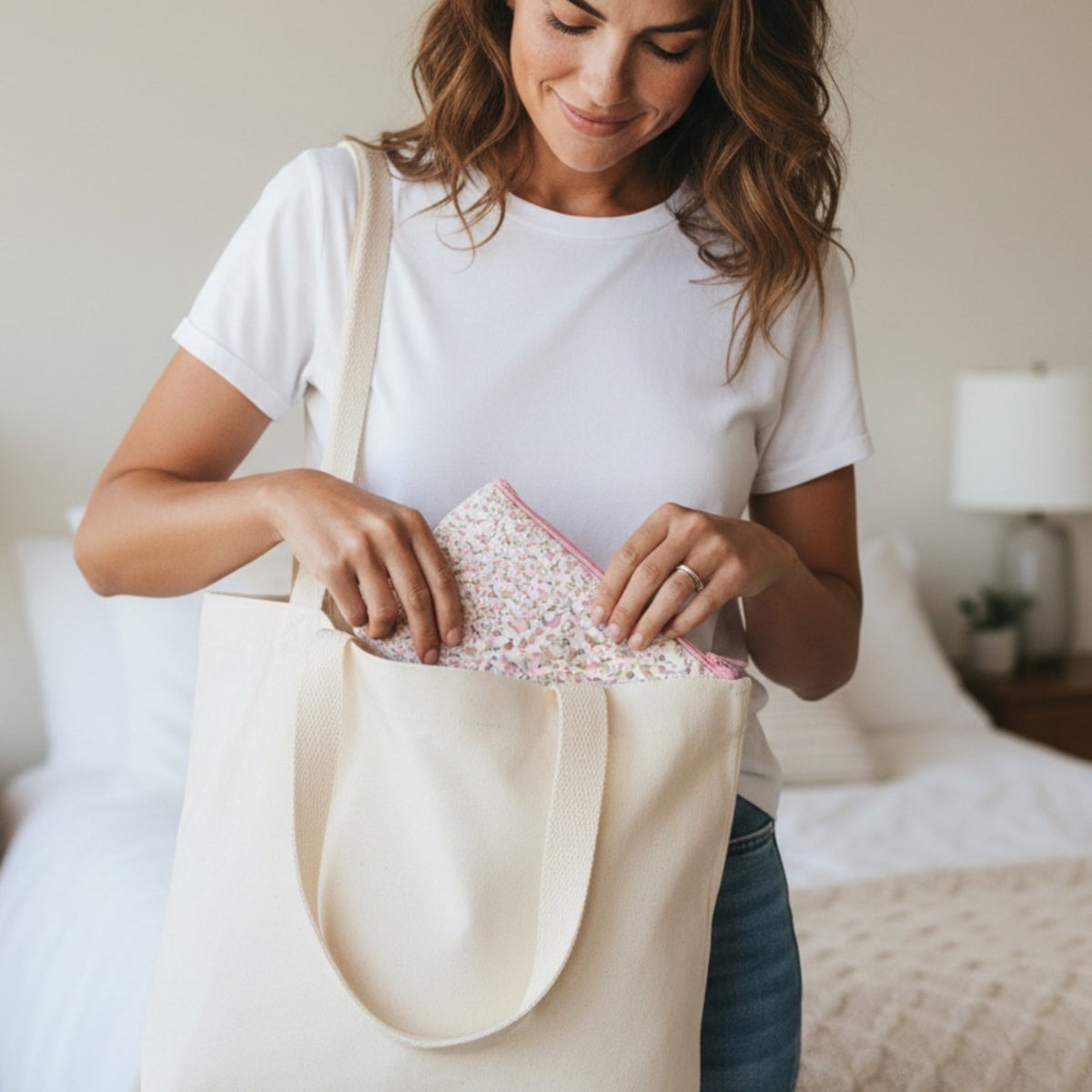
The short answer
Choose a small organizer pouch when a few essentials should stay together or move between bags. Consider a multi-pocket insert when you want separate places throughout a larger bag. Compare the loaded arrangement, the bag's opening, and how you reach for things. If the pockets you already have work well, you may not need either.
The bag changes. The small essentials often do not.
Your wallet may already have a place. It is the lip balm, hair tie, or charging cable that takes a second search. Or perhaps everything sits in one deep compartment, and you want individual places for more of what you carry.
Those are different problems. One calls for keeping a small group together. The other calls for arranging a larger part of the bag's interior.
Our Fashion & Beauty essentials guide introduces the wider questions of fit, construction, and care. Here, we focus on choosing an organizer that suits the contents and the bag you already use.
A Pouch and a Bag Insert Solve Different Problems
Start with the layout, not the product name. Decide whether you want to contain one group or create separate places for several groups.
The label “purse organizer” does not tell you the complete construction. For this comparison, a pouch is a small removable container for selected items. A bag insert is a multi-pocket organizer intended to arrange a larger part of a bag's interior.
Some designs combine features of both. Use the photographs, measurements, and compartment layout to understand the actual item rather than relying on its title.
| Your decision | Small organizer pouch | Multi-pocket bag insert |
|---|---|---|
| What you want to organize | One selected group, such as small accessories or personal-care items. | Several items that need separate positions within a larger bag. |
| How you want to retrieve things | Take out the group or open the pouch to reach an item. | Reach into the relevant pocket while the insert remains in the bag. |
| What to measure | The packed pouch, its usable opening, and the route into the bag. | The insert's outer dimensions, pocket openings, and fit within the bag's base and closure. |
| Changing bags | Check whether the same packed group fits each bag you intend to use. | Check whether the complete insert fits and remains usable in each bag. |
| Space to allow | Room for the filled pouch alongside anything carried separately. | Room for the organizer's walls and dividers as well as its contents. |
Neither format is automatically the better organizer. A pouch may be enough for a few loose essentials; an insert may be worth considering when you want more individual positions throughout a tote.
Start With What You Actually Carry
Lay out the contents before choosing the container. Separate the items that belong together from those that already have a useful place.
Empty the bag onto a clear surface and make three small groups:
- Everyday essentials: the items you use on an ordinary day.
- Occasional extras: things needed for a particular plan rather than every outing.
- Items to remove: receipts, duplicates, and belongings that no longer need to travel with you.
Now choose the group that needs help. That might be a compact mirror and a few touch-up items, or a cable and small accessories. You do not have to put every possession inside the same organizer.
Leave a wallet in a useful existing pocket if that arrangement already works. Keep a frequently used item easy to reach rather than adding another closure simply to make everything look coordinated.
If you already own a suitable pouch, try the grouping with that first. The exercise may reveal that you need a different layout, fewer contents, or no new purchase at all.
Measure the Bag, the Opening, and the Loaded Shape
Compare usable interior space with the organizer's packed dimensions. Fitting inside the bag is only part of the check; you also need to put it in, reach it, and close the bag.
Measure the Space You Can Actually Use
Record these details with the bag in its normal shape, without stretching it:
- Interior base: the usable width and front-to-back depth, allowing for lining, fixed pockets, and a tapered shape.
- Usable height: the room below the bag's closed zipper, flap, or other fastening.
- Entry opening: the space the organizer must pass through, including any narrowing caused by handles or hardware.
- Remaining space: the room needed for items that will stay outside the organizer.
Do not substitute the handbag's exterior dimensions for these measurements. A wide base can sit beneath a narrower opening, and an internal pocket can occupy space you expected to use.
Allow for the Contents
Check whether the organizer's stated measurements describe its outer size, usable interior, or empty flat shape. For a pouch, the packed thickness matters alongside width and height. For an insert, consider what happens when its pockets are filled.
A paper outline can help you visualize a proposed footprint. It is only a rough planning aid: it does not reproduce the finished item's thickness, stiffness, seams, or loaded shape.
When you can assess the actual combination, check that:
- The organizer passes through the opening without forcing it.
- The bag closes without pressing awkwardly against the contents.
- You can reach the organizer's closure and the items kept beside it.
- You can remove the organizer without first emptying unrelated belongings.
If an essential measurement is missing, resolve it before ordering rather than assuming a soft material will make any size work.
Choose Access Before Compartment Count
Choose a layout around the things you reach for and the way you use the bag. More pockets are useful only when they give those items workable places.
Walk Through an Ordinary Moment
Picture taking out your keys, paying for something, or finding a small personal item. Would you prefer to lift out one pouch, or reach directly into a separate pocket?
For a pouch, check how far the opening extends and whether you can see or reach the contents without removing everything. For an insert, compare the individual pocket openings with the objects intended for them.
A pocket that looks generous from the front still needs a usable opening and enough depth. Check the actual layout rather than counting compartments in a product photograph.
Use Two Layers Only When Both Have a Job
A pouch inside an insert can make sense when you want to remove one small group while leaving the rest arranged. It is less useful when the second layer merely adds another zipper between you and something you use frequently.
Try the retrieval sequence in the order you would perform it. If you repeatedly move one container to reach another, reconsider their positions or whether both are needed.
Plan for Cleaning and Added Bulk
Include the organizer itself in the space and care plan. Choose something you can empty, clean as instructed, dry, and return to use.
Review the complete construction, including the lining, seams, closures, and any removable base or stiffeners. Check which parts can be cleaned together and which need separate treatment.
Do not assume that a fabric description establishes machine-washability. GINETEX's textile-care guidance explains that care symbols account for the components most sensitive to treatment, including finishes and accessories such as zippers. Follow the care instructions for the complete organizer rather than judging by its outer fabric alone.
For Love Dug's Multi-Use Purse Organizer, the listing specifies localized cleaning with a damp cloth followed by air drying.
Keep liquids in properly closed containers. Do not treat an ordinary zipper or lining as proof that a pouch will contain a leak. If containment is essential, look for documented suitability for that particular use.
Consider the loaded bag too. Leave room for your normal belongings, and reassess any organizer that encourages you to carry items you would otherwise leave at home.
Three Ways to Choose
Match the format to the problem you noticed. These examples are starting points, not a shopping list everyone needs.
You Switch Between a Tote and a Smaller Bag
A small removable pouch is a direction to explore when the same few essentials make the move. Pack that group first, then compare it with both bags rather than checking only the roomier one.
Check first: the packed thickness, the smaller opening, and what still needs to fit beside the pouch.
You Use One Deep Tote Most Days
A multi-pocket insert may suit the job when several belongings need individual places. Sketch where the main items would go, then compare that arrangement with the insert's actual pockets.
Check first: the base fit, reachable pockets, and whether the loaded insert leaves the tote's closure usable.
Your Bag Already Has Useful Compartments
Start by using those compartments deliberately. You may need only a small pouch for one loose group, or no additional organizer at all.
Check first: whether a new container solves a recurring problem or duplicates a place you already have.
Where Love Dug's organizer fits
The Multi-Use Purse Organizer is presented as a small polyester pouch with a zipper for grouping personal-care or makeup items. It is the pouch example in this guide, not a full-bag compartment insert.
Choose it for a suitable small group after checking the selected option against your contents and bag. If your goal is separate pockets throughout a tote, look for that layout rather than expecting this pouch to create it.
Make a Short Buying Checklist
Record the few details that could change your choice. Resolve the missing one before comparing colors or adding accessories.
- My contents: the exact group or individual items I want to organize.
- My bag or bags: the usable interior, entry opening, and closure space.
- My loaded fit: the organizer's packed shape and the room needed for everything else.
- My access: whether I want to remove a group or reach individual pockets.
- My care routine: how I will empty, clean, dry, and reuse the organizer.
Confirm the selected option and what is included. Review the current Return & Refund Policy before ordering, and contact Love Dug if a missing measurement or product detail determines whether the item will work for you.
Questions About Purse Organizers and Bag Inserts
Is a Purse Organizer the Same as a Bag Insert?
Read the construction rather than relying on the name. In this guide, a pouch holds a selected group, while a multi-pocket insert arranges a larger part of the bag's interior. Compare the actual layout and measurements of the item being sold.
How Do I Choose the Right Size?
Measure the usable interior, the entry opening, and the space below the bag's closure. Compare those with the organizer's outer dimensions and loaded shape, leaving room for belongings carried separately.
Can I Move One Organizer Between Different Bags?
Check every intended bag with the same planned contents. The smallest bag is an important check, but different openings and interior shapes also matter. An organizer that works in one bag is not automatically a match for another.
Will a Bag Insert Keep My Handbag Upright?
Do not assume shape support from the word “insert.” If that is your priority, examine the exact construction, stiffness, and intended fit. A small soft pouch should not be treated as a bag-shaping structure.
Can I Use a Pouch Inside an Insert?
Yes, if each layer has a purpose and the loaded arrangement still fits. A removable pouch can group selected items within a larger layout. Check that the extra layer does not make ordinary retrieval unnecessarily awkward.
Can I Wash a Purse Organizer?
Follow the finished item's care instructions. Fabric, lining, closures, and stiffeners may have different requirements. Do not assume that a washable material makes the complete organizer machine-washable.
Product Information and Notes
This guide compares storage layouts rather than reporting hands-on product tests. The scenarios are illustrative, not guarantees of fit or capacity.
The linked Love Dug product listing supplies the product description and care information used here. Check the current details for the option you intend to purchase.
Keep what you use together. Leave room for everything else.
Start with the belongings you reach for, give them a workable place, and keep the arrangement easy to put back.
Selected sources
Read more

Compare handheld milk frothers by the drink, the cup, and the cleanup, with a practical checklist for choosing what fits your coffee routine.
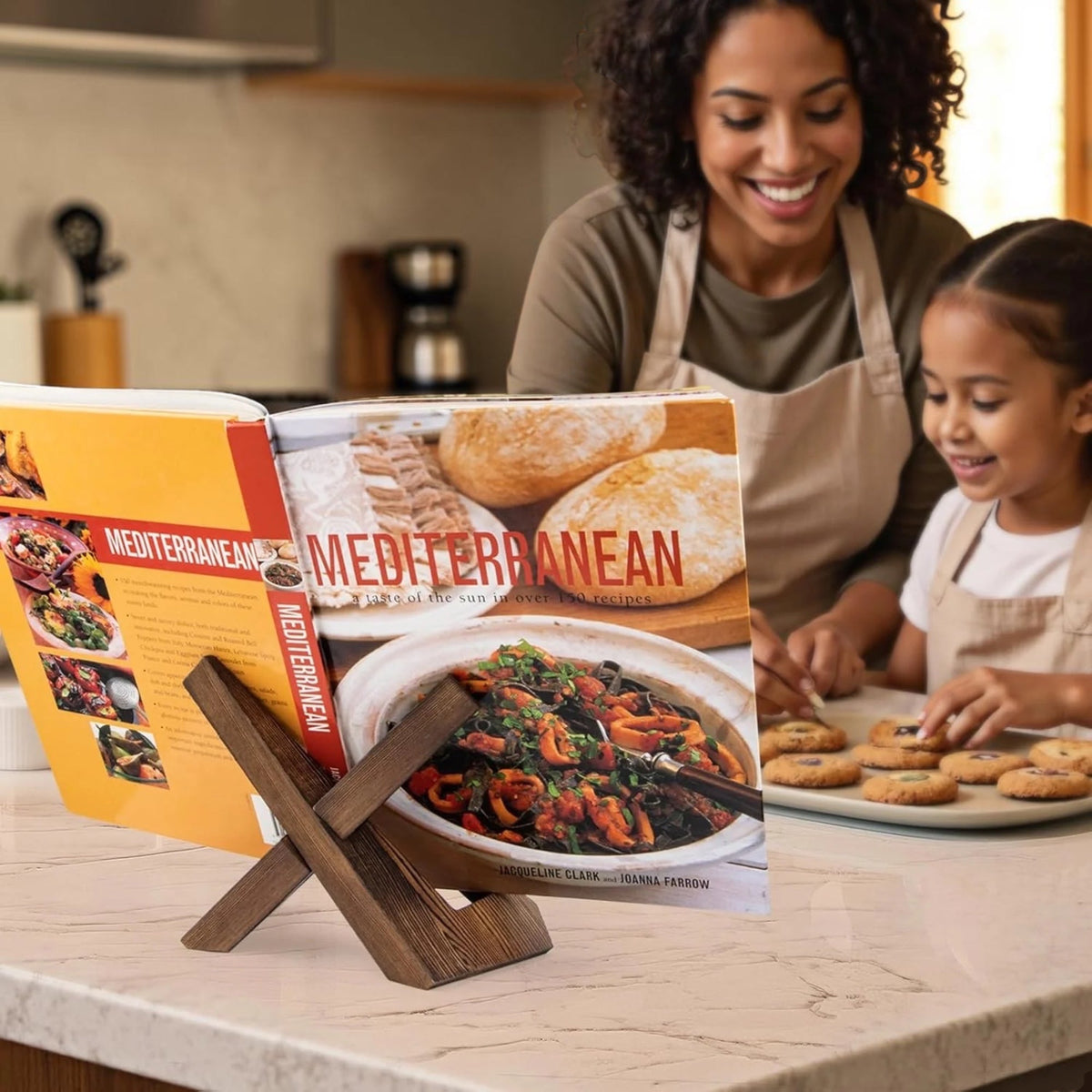
A cookbook stand should suit the book you open most, not just the counter in a photograph. Compare page support, reading position, working space, and storage before you choose.