














The short answer
A TV is usually the simpler choice for everyday viewing in a bright room. A projector makes more sense when you want a larger picture for planned viewing, can control the light, and have a workable place for the complete setup. In a small room, choose around when you watch and where everything goes—not the biggest screen size on the box.
Choose for a Tuesday, not just movie night.
The idea is appealing: dim the lights, settle into the sofa, and give the evening a picture worth putting your phone down for.
But the same room may also be where you eat lunch, work, fold laundry, or watch something while dinner cooks. A display that suits one of those moments beautifully may be inconvenient for the others.
That is the useful starting point in the projector-versus-TV decision. You are not choosing which technology wins in every situation. You are choosing the arrangement you will enjoy using in this room.
Our Home & Kitchen essentials guide looks at objects through the routines they support. Here, we apply that approach to the picture, the placement, and the everyday experience around it.
Choose for an Ordinary Evening
Favor a TV when you want frequent, straightforward viewing without changing the room’s lighting. Favor a projector when making the room ready is part of an occasion you enjoy.
That does not mean every projector needs total darkness or every television handles reflections well. Exact performance varies. It means daylight and frequent casual viewing generally make a TV the easier starting point.
A projector can be particularly appealing when the room should return to other uses afterward. The trade-off is the setup: positioning the unit, arranging the image surface, connecting the source, and putting everything away when required.
| Your usual situation | Better starting point | Why |
|---|---|---|
| Daytime programs with curtains open | TV | Usually requires less management of room light and projection conditions. |
| A film after dark, with lights lowered | Projector worth considering | The viewing session can suit a larger image and a deliberate room setup. |
| Short, frequent viewing sessions | TV | A permanent arrangement avoids repeated positioning and connection work. |
| Occasional viewing in a multipurpose room | Depends on the complete storage plan | A projector may be put away, but its screen, cables, source, and audio equipment also need a home. |
| Gaming where responsiveness matters | Compare exact models | The format alone does not establish input lag or suitable gaming performance. |
Think about the last few times you watched something. If most were quick episodes with the room still bright, choose for those evenings. The occasional grand movie night should not make every ordinary evening harder.
Measure the Picture, Not Just the Wall
Turn the advertised diagonal into an actual rectangle, then work out whether that rectangle belongs in the room. A large diagonal can hide just how much wall the image needs.
Turn the Diagonal Into Width and Height
For a 16:9 picture, the examples below show the image area alone. A television’s frame and stand, or a projection screen’s border and support, need additional space.
| Diagonal | Image width | Image height |
|---|---|---|
| 60 inches | 52.3 inches | 29.4 inches |
| 80 inches | 69.7 inches | 39.2 inches |
| 100 inches | 87.2 inches | 49.0 inches |
A 100-inch picture is therefore more than seven feet wide before adding any border. Compare that with the uninterrupted wall—not the wall’s full width behind a bookshelf, doorway, or lamp.
Sketch the rectangle to scale on a room plan, or use a surface-safe temporary outline where appropriate. Sit in your usual place and consider its height, furniture below it, and whether everyone has a clear view. This is a layout preview, not a test of picture quality or viewing comfort.
Work Backward to the Lens
A projector also needs the correct distance between its lens and the image surface. That relationship depends on the exact lens and projector; “mini” does not mean “short throw.”
Where a manufacturer supplies a throw ratio, the basic relationship is projection distance divided by image width. Use its distance chart or calculator for the actual model, including any stated zoom or placement limits.
This is why choosing an empty shelf first can disappoint. The shelf may be convenient but too near, too far away, or at an unsuitable height for the picture you want.
Choose a sensible image size, locate the lens position it requires, and then decide whether the room can accommodate it. The largest possible picture is not automatically the most enjoyable one.
Plan the Whole Setup Around the Room
Count the space used by the display, its support, its connections, and the people moving around it. A small device can still create a large arrangement.
Keep the Walking Route Open
Picture someone getting up for water. Does that route pass through the projected image? Does it cross a cable between the sofa and the outlet?
A projector on a central table may be easy to position but compete with snacks, drinks, and the route through the room. A different documented placement may work better; moving the coffee table every evening may not.
Plan the power connection at the same time. The U.S. Fire Administration’s appliance and electrical guidance addresses damaged cords and overloaded outlets. Follow the equipment’s power instructions and keep connections out of the way rather than improvising around an awkward position.
Give Either Display a Proper Home
A TV needs a suitable stand or a correctly installed compatible mount. A projector needs the support, ventilation, and clearances specified for its model. Neither belongs precariously balanced on furniture chosen only because it reaches the right height.
For televisions and supporting furniture, follow the appropriate securement instructions. The CPSC’s Anchor It! guidance explains the importance of preventing furniture and television tip-overs.
For a put-away projector setup, include the after-use routine too. Where will it remain while completing any required shutdown or cooling steps? Where do the cables and accessories go? Storage should be part of the plan, not a pile that migrates between the sofa and a dining chair.
Make Streaming Part of the Decision
Start with the service or content you want to watch, then identify the complete route to picture and sound. A connection label alone does not establish that your intended playback method works.
Write down four things:
- The content: your subscription service, live television source, game console, or personal media.
- The playback device: the display itself or a compatible external source.
- The connection: the exact supported way the picture reaches the display.
- The sound: the documented built-in or external audio arrangement.
Then include power for anything added to the setup. An external source device may solve a playback requirement, but it is still another component to connect, control, and store.
For subscription apps, verify support for the actual service and playback route. Being able to connect a phone or mirror some content does not establish that every protected video service will play through that method.
The same practical thinking applies to a television. Choose around the services and devices you use, rather than assuming a familiar app or connection is present on every model.
Once projection is the preferred format, our guide to choosing a mini projector takes the next step into brightness, picture size, placement, and connections.
Compare the Setup You Will Actually Own
Compare complete arrangements, not the price or size of the display alone. Include the parts required for your intended room and viewing method.
For a projector, that could mean a suitable image surface or screen, a support, an external source, cables, and audio equipment. For a TV, it could mean a stand or mount, installation, an external source, and sound equipment.
Do not add everything automatically. Identify what the selected model already provides and what your setup genuinely requires. A smaller list is useful when it is complete—not when it leaves out the connection that makes the evening work.
Energy use also belongs to the exact equipment, not to an assumption that a smaller box must consume less. ENERGY STAR’s television information is a starting point for television efficiency. A fair comparison with projection needs the relevant equipment specifications and should include any separately powered source or audio devices.
Finally, ask how often the setup will move. If you want to watch frequently but must unpack several pieces each time, convenience may matter more than gaining another stretch of picture.
Two Small Rooms, Two Different Answers
The better format is the one that suits the room’s ordinary use. These examples illustrate the decision; they are not tested installations.
The Bright Everyday Living Room
The curtains stay open. Someone watches a program over lunch, another person streams an episode while folding laundry, and the screen is used most days.
Start with a TV. Choose its size and position around the seating and reflections, then give it a suitable permanent home. A projector would introduce lighting and placement decisions into short sessions that are supposed to be easy.
That is not a less special choice. It is the one that leaves the room available for the way you already live.
The Room That Becomes a Movie Room
The room is used for work or hobbies during the day. Viewing happens after dark, the lighting can be lowered, and you are happy to prepare the space for a film.
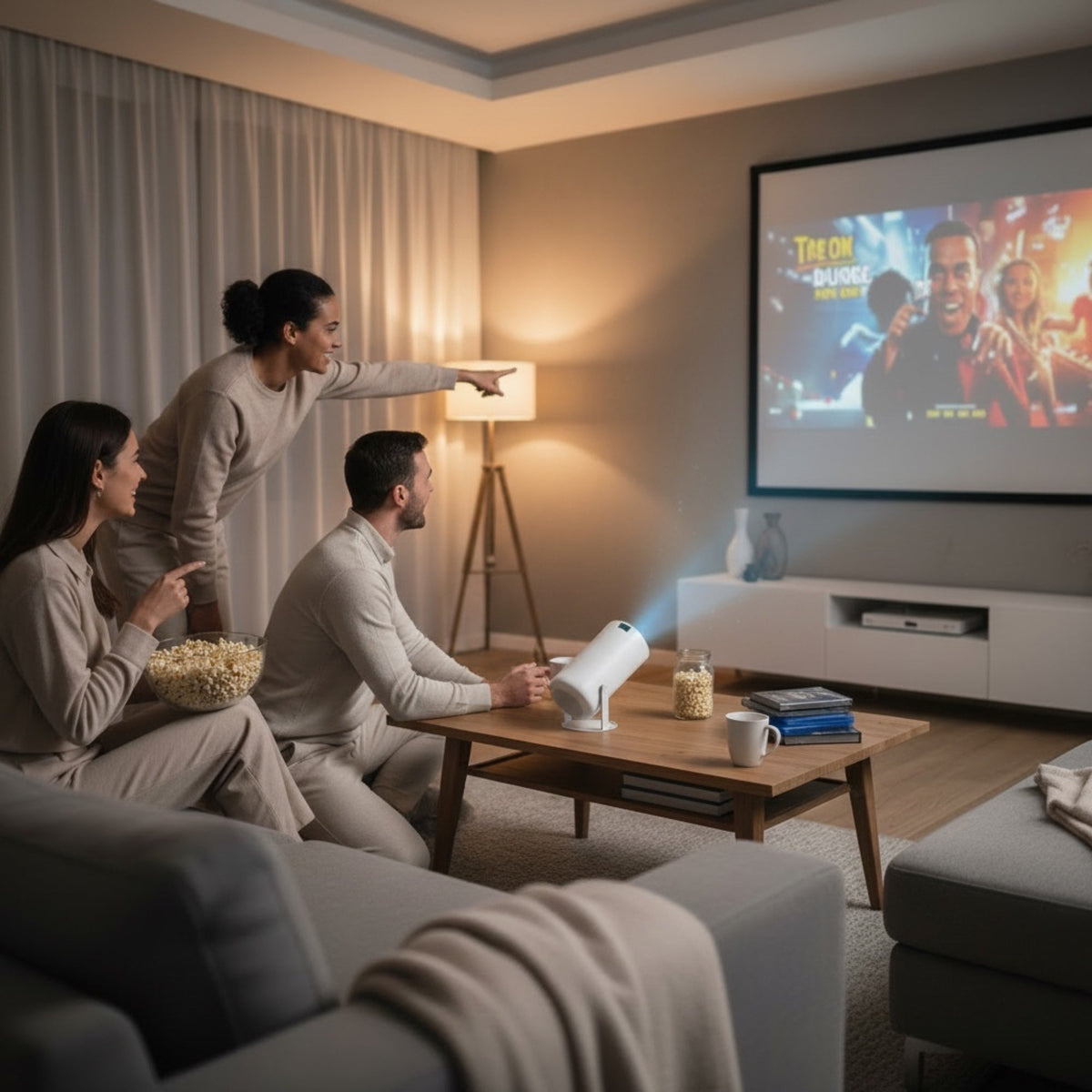
A projector is worth considering here—provided the image area, lens position, connections, and storage work together. A larger picture can be part of the occasion without requiring the room to revolve around a permanent television.
The Love Dug option
If that second room sounds like yours, explore our Portable Home Theater Projector. Use your intended picture size, available placement, and preferred streaming source as the shortlist—not an assumption that “portable” means it works anywhere.
The useful match is the projector whose documented setup fits your evening. Picture size alone cannot make that decision.
Keep the first session simple: familiar seating, a clear walking route, and a film you actually want to watch. The room does not need cinema-themed cushions to understand the assignment.
Projector or TV Questions
Is a Projector Better Than a TV in a Small Room?
Not automatically. A projector may suit occasional evening viewing, but it still needs an appropriate image surface, lens position, connections, and operating space. A TV is often simpler for frequent viewing in a bright room.
Does a Projector Need a Completely Dark Room?
Not every projector or setup does, but room light affects the result. Suitability depends on the exact projector, image size, surface, and light conditions. Do not judge daytime performance from a photograph of a dark-room demonstration.
Can I Use a Wall Instead of a Projection Screen?
A wall may be usable, but its color, texture, flatness, and surroundings affect the image. Compare the result and the selected projector’s guidance before treating an empty wall as equivalent to a suitable screen.
Does Portable Mean Battery-Powered?
No. Portability does not establish the power arrangement. Read the exact model’s requirements, included components, and any documented battery information before planning a setup away from an outlet.
The best picture is one you enjoy making time for.
Choose the format that fits your ordinary evenings, then make the special ones a little more inviting. Keep the comfortable seat, leave a place for your drink, and let the room remain yours when the credits end.
Sources and Updates
This guide provides an original room-planning framework, illustrative scenarios, and calculated dimensions for a 16:9 image. It does not report hands-on comparison testing or establish the performance of a particular projector or television.
The dimension table uses the stated diagonal and the 16:9 aspect ratio, rounded to the nearest tenth of an inch. It excludes frames, stands, screen borders, and operating clearances. Follow the instructions for the exact equipment you choose.
Selected sources
Read more

The bag is still a favorite. Give it a quieter strap, a little contrast, or a better home for the small things—without changing everything you like about it.

A shirt for dinner, a favorite knit, and room for the trip home. Build a small garment-care kit around what you’ll wear, where you’re staying, and one useful touch-up.